Showing posts with label Children. Show all posts

Thursday, March 2, 2017

Celebrate the Small Things: A Better Doll for Our Girls - Lammily Dolls

I love dolls, don't you? I don't speak for everyone, I know, but I think the majority of women enjoyed dolls as girls. Some of you became collectors as adults.

Lammily Doll in middle

And not to the leave the guys out reading this, I know that some of you had your favorites. My son had a "Ronnie-Donnie" doll, a McDonald's rag doll version of Ronald McDonald. I washed it until it fell apart and disappeared one day never to reappear again.

A recent post on Facebook about the new Lammily doll brought back some fond memories of my experience as a girl.....

As a young teen, thirteen-years-old, my best friend and I decided one day we were "too old to play with dolls." At school all of the other girls it seemed were busy gossiping about boys and 'who liked who' etc., so playing with dolls just didn't fit into our worlds anymore.


But emotionally, my BFF and I were torn, unwilling to let go just yet.

We embarked on setting up a secret society of sorts known only to us. After school or whenever possible we would secretly smuggle our doll collections across the street in paper garbage sacks between our homes.  We also liked to play in a wooded area nearby. Fun days. We fired up our imaginations and had a ball, playing mamas with our baby dolls or 'mean headmistress' at the orphanage (our favorite) with our older dolls.

Although available, I didn't have Barbie dolls for some reason. I think my mother worried about those boobs and exposed legs, although my last doll was adult size, full-breasted and dressed in formal lace and black taffeta. She fit perfectly into any romantic scenarios I came up with. It all seems kind of silly now, this nostalgic glance back at the crossroad of becoming a young woman, yet role playing is how everyone learns, and it's just as important to girls and teens today.

[Click my post for  history of Barbie Doll: "B is for Barbie Doll,
Inventions by Women]

<http://shells-tales-sails.blogspot.com/2015/04/b-is-for-barbie-doll-inventions-by.html>

Unlike the pencil thin Barbie dolls with unrealistic body measurements, the Lammily doll is proportioned as a real girl or budding teen might look today. Cute, a bit on the pudgy side and without makeup. I grew up ultra skinny, reacting to my body shape in reverse, 'flat as a pancake' as a teen. Neither of the reactions, fat or skinny, did much for our self esteem growing up. Too many girls (and adults) struggle with low self-esteem based on their body weight and shape, so I want to congratulate the family and makers of the Lammily doll, Lammily, LLC 


 <https://lammily.com/special-offer-2/>

Interesting, the creator of this doll was an uncle who had purchased a
Barbie for his niece in Pittsburgh and thought doll makers could do a
better job. Click the below link for his story and a special offer (dolls
available only online).


https://www.facebook.com/OfficialLammily/videos/1100892270019074/

Below are kids' reactions on YouTube


Kids react in school.


 A Mom asked her girls what they think.


I'm celebrating
the return of spring,
blogging again, and 
this special story about dolls
 
Have a nice weekend everyone!


To join "Celebrate the Small Things:  visit Lexa Cain's blog
Co-hosts are: L.G. Keltner @ Writing Off The Edge
Tonja Drecker @ Kidbits Blog


Monday, December 1, 2014

Native American Sports & Games by Rob Staeger: Book Review


 Native American Sports & Games
“Native American Life” (series)
Author: Rob Staeger
Publisher: Mason Crest, 2014
Ages: 10-up, Middle Grade
Pages: 64

In this edition of the “Native American Life” series, readers learn about the many sports and games that Native Americans enjoyed in the past. Historically, this activity was a favorite pastime, but who actually participated in such or the rules governing and the reason for playing varied from tribe to tribe.

Games and sports often held spiritual significance. They were played to cure diseases, for blessing of crops and giving thanks, and as preparation for war, among other. A popular common ball game was lacrosse, which had a mythological origin and was originally used to teach the men skills needed in battle. Other games were simply played for fun. Types of games included guessing games; ball and dice games; archery; spear throwing; foot and horse races; wrestling; hoop and pole games; boxing; and gambling. The latter activity, gambling, was especially popular, which over time increased as games and sports decreased in spiritual significance.
Games were commonly divided among the sexes. Men and boys rarely played against the women and girls, although there were exceptions. Men and women in the Southwest, for instance, competed against each other in rabbit hunts. Some Native Americans were excluded from games and sports all together. In Central and South America, among the Aztecs, Incas and Mayans, only the elite class participated in games, as the poorer working class had little time to play.

Staeger describes games and sports in the American Northeast, Southeast, Northwest, Far North, and Southwest regions; and also Central and South America. Chronology, Glossary, Resources and Index are included, as well as plenty of photos and illustrations.

I like that some sports and games are played to this today. Two ball games the author describes reminded me of basketball and soccer, and now I wonder about the origin of those two games. The string game, Cat’s Cradle, was most familiar. It took me back to my girlfriend days on lazy afternoons in my youth. This could be a fun book for students in school.....and for parents and kids looking for something to do on a "lazy afternoon."


Copyright 2014 © Sharon M. Himsl


Tuesday, November 18, 2014

Native American Cooking by Anna Carew-Miller: Book Review


Native American Cooking 
“Native American Life” (series)
Author: Anna Carew-Miller
Publisher: Mason Crest, 2014

Age: 10 up, Middle Grade nonfiction
Pages: 64


 One half of all food crops grown today were developed from the wild by Native Americans, according to Carew-Miller. Some crops can be traced back eight thousand years. Corn, squash and beans were the three main staples developed by the agricultural tribes, and became known as the “three sisters.” In some tribes only the men grew and tended crops, while in others only the women did. 


Non-agricultural tribes, more affected by the climate and habitat, relied more on hunting, fishing and the gathering of berries, roots and other foods (non crops) in the wild. All of the tribes, therefore, had their own brand of cooking methods and recipes. When Europeans began arriving and settling native land, they adopted many Native American foods, while also sharing the foods and animals brought with them. For instance, the Navaho learned how to herd sheep and the settlers learned to eat corn bread. 

However, the settlers often depleted traditional food sources by over hunting and forcing Native Americans to relocate. Large numbers were ordered by the U.S. government to leave the land for reservations, where many suffered poor health from the lack of traditional foods. To compensate, they learned how to cook with new ingredients, using wheat flour, for instance, and creating new recipes (such as “fry bread”). Native Americans prepare traditional foods to this day, some during special ceremonies demonstrating the spiritual connection to food. Other foods are quite common, such as tortillas, beef jerky, steamed shellfish, smoked salmon, succotash, hominy, and chocolate.

Carew-Miller discusses six Native American groups: 1) Northeastern U.S. and Canada, 2) Southeastern U.S., 3) U.S. Southwest and West, Mexico, 4) Central and South America, and the Caribbean, 5) North Central and Western U.S. and Canada, and 6) the Far North. Photos are provided throughout, as are a glossary, chronology and list of resources. Plenty of detail on every page.

Personally, I would have liked a few recipes, but that's just me. Native American Cooking is geared toward fifth graders and older kids studying Native American culture and wishing to learn more about Indians on a human level, other than the century-old conflict we all know existed between native peoples and whites. I think it adds balance to the discussion. 

Copyright 2014 © Sharon M. Himsl

Monday, November 10, 2014

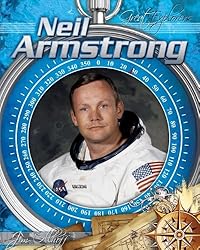
Great Explorers - Neil Armstrong by Jim Ollhoff: Book Review


Neil Armstrong (Great Explorers): Jim Ollhoff 

Great Explorers: Neil Armstrong
Author: Jim Ollhoff

Publisher: ABDO Publishing Company, 2014
Age: 9-15, Middle Grade Nonfiction
Pages: 32


Neil Armstrong was a great American hero. His legacy today as the first person to walk on the moon continues to inspire the most ardent of dreamers. “There was a feeling that if people could do that,” Ollhoff writes, “they could do anything.” Ollhoff describes Neil Armstrong as a modest, quiet man, but whose talents and achievements as a military pilot and aeronautical engineer, placed him in a unique position in history. 

In the 1950s and 1960s, the U.S. and the Soviet Union were engaged in the Cold War. The Soviet Union had just sent a man into space, and the U.S. was worried about losing control of the space frontier. In 1961 President Kennedy made landing a man on the moon a U.S. goal within the next ten years. Armstrong was accepted into NASA’s Gemini space program as an astronaut the following year. 

Ollhoff describes the training process and command decisions that demonstrated Armstrong’s skill in controlling a spacecraft. In one example, two ships had spun out of control. His intelligent response and quick action saved the lives of everyone on board. Armstrong was subsequently selected into the Apollo space program, which included many missions, one of which eventually went to the moon. 

On July 19, 1969, Apollo 11 had reached its destination and was orbiting around the moon. A lunar module, the Eagle, was launched with Armstrong at the controls. It landed on the lunar surface and Armstrong became the first man to walk on the moon. Over television, he uttered the now-famous words: “That’s one small step for a man. One giant leap for mankind.” 

Armstrong went on to have a full career, teaching and lending his expertise to NASA and the aviation industry. Ollhoff also describes Armstrong’s equally impressive early years and personal life. Model airplanes and books about flying were long his interest as a young boy. Timeline, Glossary and Index are provided. 

Great Explorers is a light introduction to the history of the space program and the life of Neil Armstrong. Designed to inspire, the story certainly does that. Personally, the moon landing is still a major event in my lifetime. On the day of the landing in 1969, I was at the switchboard working as a telephone operator in Tacoma, Washington. News came over the air on TV that the Eagle had landed. There must have been fifty or more of us working the switchboard that day. One by one we took turns taking breaks so we could run to the break room and watch the exciting news. The transmission was poor, in black and white, but the message was loud and clear.

We had landed a man on the moon!  


Wednesday, October 29, 2014

Nancy Drew Diaries - Sabotage at Willow Woods: Book Review


Nancy Drew Diaries: Sabotage at Willow Woods

Author: Carolyn Keene
Publisher: Aladdin, 2014
Age: 8-12, Middle Grade fiction
Pages: 167


Not everyone in Nancy’s community is in favor of the new sports arena proposed for Boylestown High School (BHS). The cost not only detracts from academics, the proposed location would destroy beautiful Willow Woods. Already BHS’s Green Club has voiced a protest. Meanwhile, Carrie Kim, a candidate running for city council and cousin of Nancy’s good friend George, has vowed to make the arena a reality. Nancy, George, and another friend Bess become involved when Carrie is sent two threatening notes, including a box containing a dead squirrel. Nancy is almost certain the Green Club is responsible, and while undercover, determines that club member Barney is the instigator. Nancy goes to the police and has Barney arrested. However, Nancy could not be more wrong. She then stumbles onto the truth, learning that Carrie’s campaign manager is the real culprit. Barney is exonerated and a new location for the much needed football field is found. Nancy’s nearly perfect boyfriend Ned is supportive through it all. Young readers will adore his comment, “All I ever ask is that you be yourself, Nancy.”

Short diary excerpts help pace this #5 book in the Nancy Drew Diaries series. As typical of a Nancy Drew mystery, the plot of Sabotage at Willow Woods is rather predictable, but having said that, it was comfortable and fun to read. The story is safe for the youngest readers in the 8-12 range and a sure bet for any concerned mom or grandmother looking for a book to give as a gift.   

Copyright 2014 © Sharon M. Himsl

Tuesday, February 18, 2014

John Brown: Defending the Innocent or Plotting Terror by Nel Yomtov: Book Review


John Brown: Defending the Innocent or Plotting Terror
Author: Nel Yomtov
Publisher: Capstone Press/Capstone, 2014
Age: 8 to 10, Chapter book
Pages: 32


The hanging of abolitionist John Brown in 1859 was controversial, and depending on one’s perspective, his death was either hotly protested or applauded as justly deserved. John Brown believed that slavery was wrong, a growing belief shared by many across the nation in the pre-dawn of the Civil War. Tension was high everywhere. When slavery was suddenly allowed in the new territory of Kansas, Brown and his supporters rushed to the scene in protest. A gun fight broke out and several men thought to be proslavery were killed. Brown was accused of murder and became a wanted man. Later, a raid on Harpers Ferry in West Virginia to obtain weapons went wrong, and Brown was arrested.

“Was John Brown a hero or a villain?” Yomtov asks. Readers are given the opportunity to ask this question and to see the different sides of Brown. They learn about Brown’s early life and the strong influence his father had on his religious faith and beliefs as an abolitionist. He was also married twice and had twenty children, some who supported his beliefs about slavery. His home was even used for the Underground Railroad, which helped slaves escape to freedom in the north. Many in the nation reacted to Brown’s arrest. Some respected his courage, while others condemned his actions. Yomtov’s John Brown fits well in the “Perspectives on History” series, complete with glossary, index and resources. Questions are also asked at the end to give students more to think about in their study.

Although written for young children (details are sketchy), Yomtov does a good job at showing the different facets of Brown's life. I liked learning of his background with the Underground Railroad. I was more familiar with his violent past. Some credit the incident at Harpers Ferry with starting the Civil War, which makes studying Brown's life all the more important. 

Copyright 2014 © Sharon M. Himsl

Friday, February 14, 2014

Book Buddies: A Good Thing to Celebrate

Reading is a gift we give our children.

 
 Berks County animal shelter’s ‘Book Buddies’ program is the cutest thing

Read more at http://www.philly.com/philly/blogs/phillypets/Berks-County-animal-shelters-Book-Buddies-program-is-the-cutest-thing.html#QjWLh4ZuZ3axlHET.99

This cat reminds me of an old cat adopted my family one year. She was promptly named "Tina" by my sweet daughter Rachel, who had a "Tina the Ballerina" doll at the time and was taking dance lessons. Cuter than cute as I recall, except Tina our new cat was hardly a pink-slippered ballerina!

Our orange tabby was a feisty old gal, as big as a small dog with a tough barnyard personality. She would sit on her haunches in the road in front of our home and challenge any car that tried to pass. She often won. The drivers would shake their heads and simply drive around her. She wasn't a lap-sitter either, but I remember the one time she made an exception to the rule. I was suffering from a root canal and in terrible pain. She slept next to me on the couch for most of the day, purring the way cats do. They know, they really do. Animals know when we need love the most.  

I have never heard of a "Book Buddies" program in an animal shelter before. Have you? What a terrific idea. It satisfies three of my loves - Reading, Children, and Animals. The program not only teaches kindness and epitomizes the love that people and animals sometimes share, it promotes reading and the joy of following the words out loud.

How I cherished sitting down and reading to my own children. For a time, we even had a 'Story Time' in our home after school. My husband and I sometimes read books to each other, or as a family. There is something to be said for 'hearing' the words of a good book read out loud. Soul nurturing, comforting, safely tucked in, cherished . . . words like that come to mind, and when I saw this article, my heart just warmed. Haven't done this kind of activity before? Do . . . DO. Before it's too late! Reading is a gift we give to our children . . . and to each other.


Animals love the sound of our voice, too, and I doubt if the little boy above will ever forget his experience. For all we know, no one reads to him at home and his reading level is poor, although he appears to be off to a good start. Thought this was a pretty good thing to celebrate this week. Such a simple idea, such a huge benefit!! 

Happy Valentine's Day!!

'Celebrate the small things' was started by Viklit at Scribblings of An Aspiring Author. Sign up below and meet some terrific writers and bloggers!   


Sharon M. Himsl

Writer/Author. Blogging since 2011. 
Published with Evernight Teen: 
~~The Shells of Mersing

Tuesday, February 11, 2014

Alcatraz by Nick Gordon: Book Review

 
Alcatraz
Author: Nick Gordon
Publisher: Bellwhether Media, Inc., 2014
Age: 9 to 13, Middle grade
Pages: 24


Alcatraz, a new title in "The Scariest Places on Earth" series, is a spine-chilling book designed to keep readers turning the page. Divided into four short chapters, young readers learn about the famous prison known as The Rock, Alcatraz, which is located on an island in San Francisco Bay. Closed in 1963, Alcatraz is a spooky U.S. tourist destination today. Tour guides and visitors alike have "reported strange sights and sounds" while touring the facility. The Rock has long been known for its ghost stories and unsolved mysteries that date back to the prison's beginning as a military fort in 1853. But long before the fort's construction and its conversion into a prison, even the area's Indians had long believed the island to be evil. Readers will learn about one of Alcatraz’s most famous prisoners as well, Al Capone, and the eerie tales surrounding his imprisonment. Gordon's most chilling description of the prison is of an area where prisoners were sometimes sent for punishment, called the "hole."

Alcatraz is not recommended for the nightmare-prone reader. In fact, it might make a perfect Halloween story. Photos of the prison today and from the past bring a historical perspective, while the ghostly images and the artist's renditions of past occurrences could be viewed as frightening for the youngest reader. However, for those who love a good ghost story based on eye-witness reports, as well as those interested in the history of The Rock, Alcatraz is a great resource for young researchers. The glossary and index at the end are age-appropriate, and library and web sources are provided.


Copyright 2014 © Sharon M. Himsl


Sharon M. Himsl

Writer/Author. Blogging since 2011. 
Published with Evernight Teen: 
~~The Shells of Mersing

Monday, January 6, 2014

Good Reads Choice Awards 2013: Young Adult and Younger

Really like the Good Reads Choice Awards. Readers vote on their favorite books. Be sure to click on the Good Reads link for more information and other genres. Below is a handy list of books for  young adults and younger. Books are listed in descending order, the first one having the most votes. Not my choices necessarily, but it is interesting to see what readers like. Enjoy!


Best Young Adult Fiction (20):

--Eleanor & Park by Rainbow Rowell (21,818 votes)
--Fangirl by Rainbow Rowell
--Dare You To by Katie McGarry
--United We Spy by Ally Carter
--The Moon and More by Sarah Dessen
--Just One Day by Gayle Forman
--Two Boys Kissing by David Levithan
--Out of the Easy by Ruta Sepetys
--Ali's Pretty Little Lies by Sara Shepard
--Perfect Scoundrels by Ally Carter
--If You Find Me by Emily Murdoch
--This Is What Happy Looks Like by Jennifer E. Smith
--The Distance Between Us by Kasie West
--Game by Barry Lyga
--Rose Under Fire by Elizabeth Wein
--Wild Cards by Simone Elkeles
--Forgive Me Leonard Peacock by Matthew Quick
--The Beginning of Everything by Robyn Schneider
--Where the Stars Still Shine by Trish Doller
--Golden by Jessi Kirby 


Best Young Adult Fantasy & Science Fiction (20)

--Allegiant by Veronica Roth (36,157 votes)
--Clockwork Princess by Cassandra Clare
--The Indigo Spell by Richelle Mead
--Opal by Jennifer L. Armentrout
--Scarlet (Lunar Chronicles) by Marissa Meyer
--Steelheart by Brandon Sanderson
--The 5th Wave by Rick Yancey
--The Elite by Kiera Cass
--Crown of Midnight by Sarah J. Maas
--Prodigy (Legend) by Marie Lu
--Unravel Me by Tahereh Mafi
--Requiem by Lauren Oliver
--The Darkest Minds by Alexandra Bracken
--Light by Michael Grant
--Through the Ever Night by Veronica Rossi
--The Dream Thieves by Maggie Stiefvater
--Etiquette Espionage (Finishing School) by Gail Carriger
--Siege and Storm (The Grisha) by Leigh Bardugo
--The Rithmatist (Rithamatist) by Brandon Sanderson
--The Fall of Five (Lorien Legacies) by Pittacus Lore


Best Middle Grade and Children's books (20)

--The House of Hades by Rick Riordan (42,877 votes)
--Fortunately, the Milk by Neil Gaiman
--Dork Diaries by Rachel Renee Russell
--The Land of Stories (The Enchantress Returns) by Chris Colfer
--Doll Bones by Holly Black
--The Runaway King by Jennifer A. Nielsen
--The Sun Trail (Warriors: Dawn of the Clans) by Erin Hunter
--Fyre (Septimus Heap) by Angie Sage
--Counting by 7s by Holly Goldberg Sloan
--Escape from Mr. Lemoncello's Library by Chris Grabenstein
--Navigating Early by Clare Vanderpool
--Chasing the Prophecy (Beyonders) by Brandon Mull
--Prisoner B-3087 by Alan Gratz
--Trust No One (The 39 Clues: Cahills vs. Vespers) by Linda Sue Park
--The Screaming Staircase (Lockwood & Co.) by Jonathan Stroud
--The School of Good and Evil by Soman Chainani
--The Girl Who Soared Over Fairyland and Cut the Moon in Two by Catherynne M. Valente
--The Royal Ranger (Ranger's Apprentice) by John Flanagan
--Loki's Wolves (The Blackwell Pages) by K.L. Armstrong and M.A Marr
--Rump: The true Story of Rumpelstiltskin by Liesl Shurtliff

Best Picture Books (20)

--The Day the Crayons Quit by Drew Daywalt, Oliver Jeffers (9,087 votes)
--The Dark by Lemony Snicket, Jon Kassen
--Chus's Day by Neil Gaiman, Adam Rex
--A Little Book of Sloth by Lucy Cooke
--Journey by Aaron Becker
--Unicorn Thinks He's Pretty Great by Bob Shea
--My Brother's Book by Maurice Sendak
--Count the Monkeys by Mac Barnett, Kevin Cornell
--Flora and the Flamingo by Molly Idle
--That Is Not a Good Idea! by Mo Willems
--The Matchbook Diary by Paula Fleischman, Bagram Ibatoulline
--Mr. Tiger Goes Wild by Peter Brown
--Exclamation Mark by Amy Krouse Rosenthal, Tom Lichtenheld
--Open This Little Book by Jesse Kausmeier, Suzy Lee
--On a Beam of Light: A Story of Albert Einstein by Jennifer Berne, Vladimir Radunsky
--Mr. Wuffles! by David Wiesner
--Mustache Baby by Bridget Heos, Joy Ang
--Deck the Walls! A Wacky Christmas Carol by Erin Dealey, Nick Ward
--If You Want to See a Whale by Julie Fogliano, Erin E. Stead
--Sophie's Squash by Pat Zietlow Miller, Anne Wilsdorf


About Me

My photo
You could call me an eternal optimist, but I'm really just a dreamer. l believe in dream fulfillment, because 'sometimes' dreams come true. This is a blog about my journey as a writer and things that inspire and motivate me.